


By Eugene Simonov. RwB.
On August 26, 2026, the mountains on Nepali-Chinese border roared, delivering a terrifying verdict on decades of unchecked infrastructure development. High above the Langtang region, a massive chunk of bedrock and glacier ice detached, triggering a catastrophic rock-ice avalanche. Within minutes, an estimated 110 to 130 million cubic meters of debris and water hurtled down the Lhende and Bhotekoshi-Trishuli river valleys at speeds reaching 180 km/h.
This “mountain tsunami” left over 1,500 people dead, six thousand missing, and caused billions of dollars in damage. But beyond the staggering human tragedy, the disaster laid bare the fatal flaws in Nepal’s reliance on hundreds of hydropower projects and the international “climate finance” that enables them.
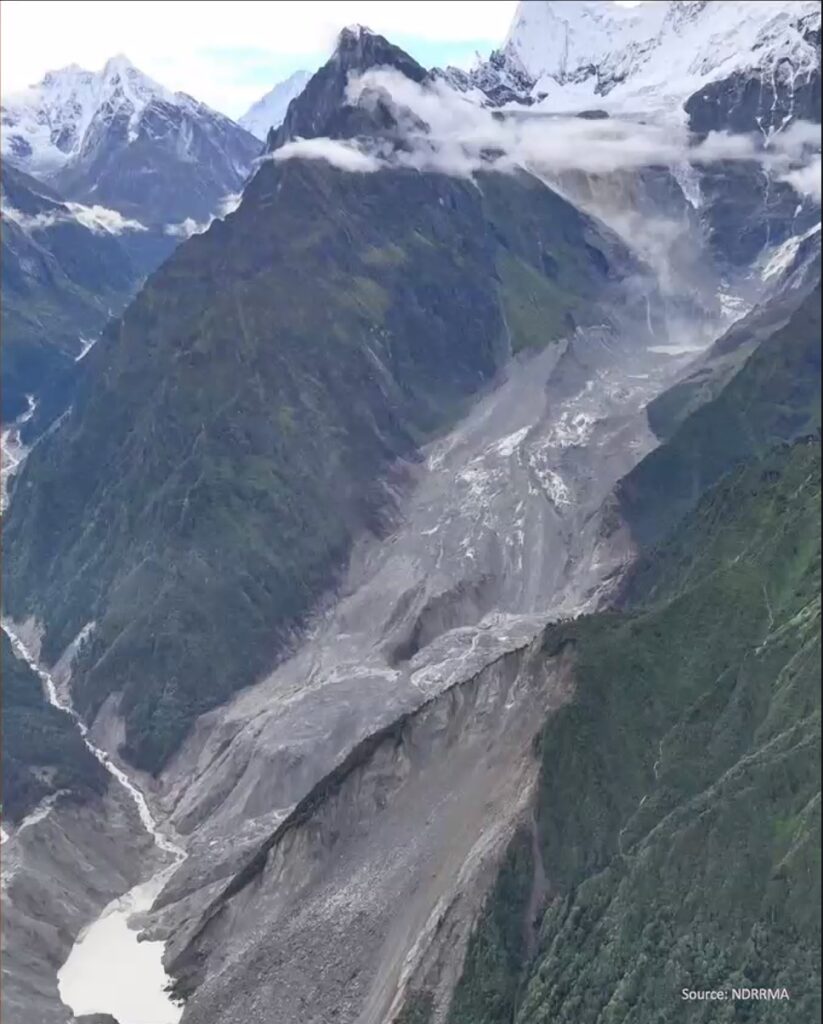
Failure to Predict and Monitor
Why the warnings failed despite the sheer scale of the incoming disaster, downstream communities and workers had virtually zero warning. Why was a catastrophe of this magnitude not predicted in time?
The answer lies in a fundamental mismatch between the nature of Himalayan hazards and the systems designed to detect and assess them. Nepal’s operational hydro-meteorological monitoring is built almost entirely on tracking rainfall and gradual river-level rises. But the August 26 disaster was not a normal monsoon flood. As Ashok Dahal from the University of Twente explained during an emergency scientific convening, “We are talking about this event as one single event, like a glacier collapse or a flood or a debris flow, but it is a combination of hazards. It is a wave of hazards.”
Because the flow travelled 22 kilometers in just seven minutes, it destroyed the very river gauges meant to trigger alerts before any warnings could be processed. There was no real-time seismic monitoring network integrated into the early warning chain to detect the initial high-altitude collapse. Anil Pokhrel, former Chief Executive of Nepal’s National Disaster Risk Reduction and Management Authority, summarized the institutional failure bluntly: “We do not have an early warning system in this country… what we have is silos of its elements and abysmally poor risk communication.”
Meanwhile the same valley was hit by major flood in 2025 and several strong geohazard events in preceding years, which nether led to development of comprehensive warning system, not stopped rampant development in the river valley.
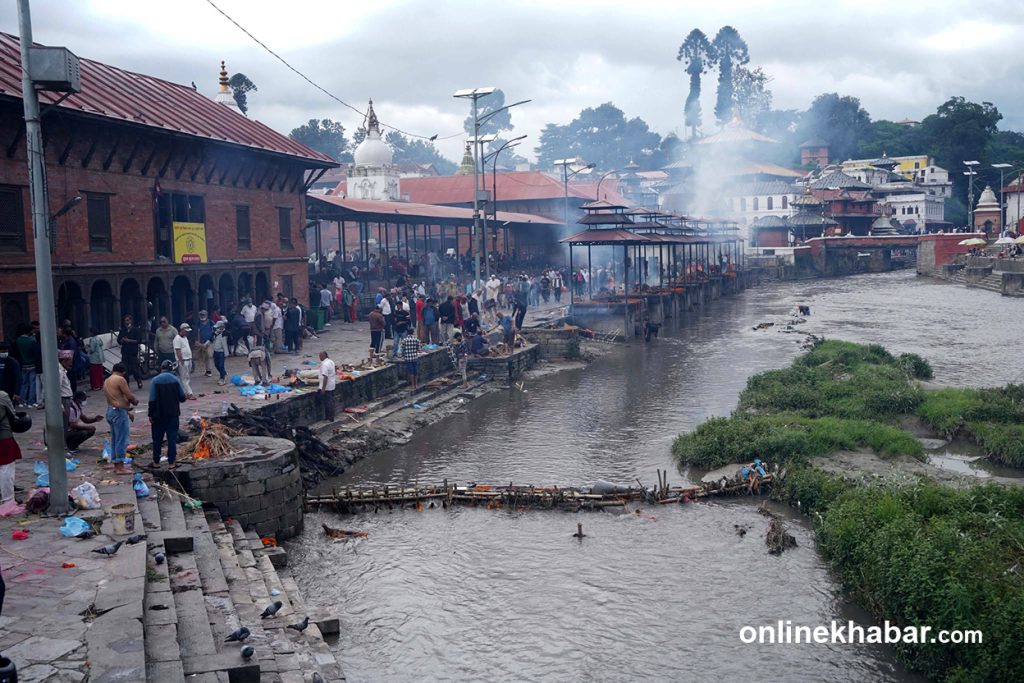
Heaps of grass burned in Hindu cremation ceremony to symbolize bodies of people missing after the flood (6000 people were still missing one month after the flood)
Hydo-centered Development
The losses from the Bhotekoshi-Trishuli flood were exponentially magnified by ad hoc, river-centric development. For decades, Nepal has concentrated its economic corridors, settlements, and critical infrastructure on the bottoms of narrow, steep-sided, glacier-fed valleys.
Nowhere is this vulnerability more apparent than in the energy sector. According to the government’s Rapid Damage and Needs Assessment (RDNA), 13 hydropower projects were severely damaged or completely destroyed, knocking out nearly 760 MW of generation capacity. The energy sector suffered an estimated $889 million in physical damages alone. The $650 million, 216-megawatt Upper Trishuli-1 (UT-1) project, once touted as a triumph of green infrastructure, was virtually obliterated, burying hundreds of workers deep inside its tunnels. This makes at least 10% of country’s energy system capacity.
Himanshu Thakkar, coordinator of the South Asia Network on Dams, Rivers and People (SANDRP), notes that the scale of this destruction is directly tied to “the callous way in which major ventures, including a large number of hydropower projects, have been taken up, ignoring the inherent vulnerabilities of the Himalayan region, accentuated by climate change.” By treating volatile mountain river systems as stable, predictable resources, developers effectively planted “hydro-bombs” in some of the most seismically and climatically fragile terrain on Earth.
Prospects of Change
If massive run-of-river dams in narrow Himalayan gorges are no longer safe, what are the alternatives? The August 26 disaster proves that relying on a “hydro-monopoly” for 97% of the nation’s electricity capacity is a dangerous gamble.
To build a truly resilient power grid, Nepal must urgently diversify its energy mix. Jeff Opperman, a freshwater ecosystem conservation scientist writing for Forbes, notes that high-mountain nations “will likely benefit from diversifying future energy expansion plans to include more wind, solar and batteries.”
Opperman also highlights a safer hydro-alternative: Pumped Storage Hydropower (PSH). “Because one, or even both, of the reservoirs of PSH can be built away from river channels, PSH has considerably lower risks from floods than does conventional hydropower,” he explains. Decentralized solar and wind networks, paired with off-river storage, can meet domestic energy needs without fragmenting vital ecosystems or placing thousands of lives in the path of cascading debris flows.
If the alternatives are clear, why isn’t Nepal pursuing them? The primary obstacle is a deeply entrenched, hegemonic political discourse that frames unbridled hydropower expansion as the singular engine for the country’s prosperity. The intoxicating dream of becoming the “battery of South Asia” through lucrative energy exports to India and Bangladesh blinds domestic elites and planners to the ecological realities of a warming cryosphere.
Influential observers such as Bikash Pandey of Winrock do not believe that the nation is capable of deviating from the beaten path no matter how perilous it is: “Tens of thousands of Nepalis depend on the sector. Cement and steel factories, steel pipe and gate fabricators, suppliers, engineering firms, transporters, consultancies, environmental specialists, insurance companies, banks, and retirement funds all have a stake in the continued construction of hydropower projects.”
The architect of the Nepal’s energy system, a former energy minister and now a party leader, Kulman Ghising, optimistically describes way forward as better waterproof access tunnels, reinforced power plant designs, beter warning systems and need to “construct at least one reservoir-based hydropower project in every river basin to mitigate sudden flood impacts and balance seasonal supply fluctuations.”
This technocratic hubris is compounded by institutional failures. Environmental Impact Assessments (EIAs) are routinely rubber-stamped, while cumulative basin-wide risks—like glacial lake outburst floods (GLOFs)—are wilfully ignored. Furthermore, this development model routinely tramples on the rights of Indigenous communities, bypassing genuine Free, Prior, and Informed Consent (FPIC) to secure land and water rights for hydropower tunnels and dams.
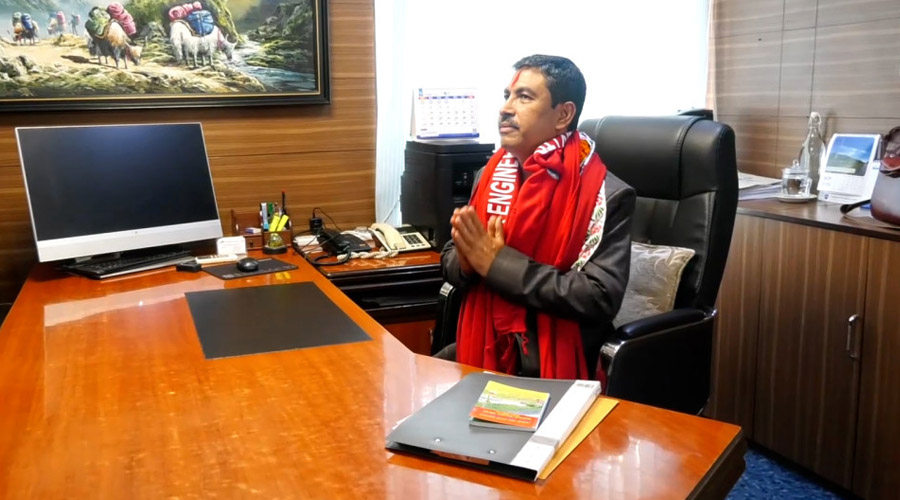
New Nepal Electricity Authority Managing Director Dirghayukumar Shrestha taking and oath on September 18
When Climate Finance Becomes Maladaptation.
Perhaps the most tragic irony of the August 2026 disaster is how it was bankrolled. Multilateral Development Banks (MDBs)—including the Asian Development Bank (ADB), Asian Infrastructure Investment Bank(AIIB) and the World Bank’s IFC—frequently channel “climate finance” into these hydropower dams, branding them as green, sustainable energy. In reality, funding vulnerable dams in destabilizing glacial valleys is the textbook definition of maladaptation.
Take the doomed Upper Trishuli-1 project. In May 2025, an independent panel appointed by the ADB explicitly warned that “no climate resilience assessment was undertaken” for the project, noting that the lack of a reliable early warning system remained “a major risk.” Their warnings were ignored.
As Himanshu Thakkar points out, “While the international banks’ own reports repeatedly highlight climate risks, they do not take any preventive steps or demand stringent checks and balances. More shockingly, the banks are funding the projects in the name of climate and disaster resilience. The banks’ failures are particularly serious because they are violating their own policies.”
Unabashed by the destruction of its major investment in Nepal, Upper Trishuli-1 Hydro, on September 24, the AIIB delegation held talks in Kathmandu with Nepal’s Energy, Water Resources and Irrigation Minister Biraj Bhakta Shrestha, who called for continued support to expand electricity infrastructure and help Nepal achieve its target of generating 30,000 megawatts of (hydro) electricity within the next decade.
To stop supporting these catastrophic failures, MDBs must immediately halt the speculative funding of hydropower dams in highly vulnerable mountain river corridors. International climate finance must be redirected away from “hydro-monopolies” and toward genuinely resilient, decentralized renewable energy grids, comprehensive multi-hazard early warning systems, and the restoration of local livelihoods with future safety and environmental resilience as the main guidance for “building back differently”.
The roaring, mud-choked waters of the Trishuli River have delivered their verdict on Nepal’s current development trajectory. It is time the world listens, before the next tsunami from the mountains washes away next river valley with its poor residents attracted to hazardous locations by the false promise of hydropower-induced sustainable development.
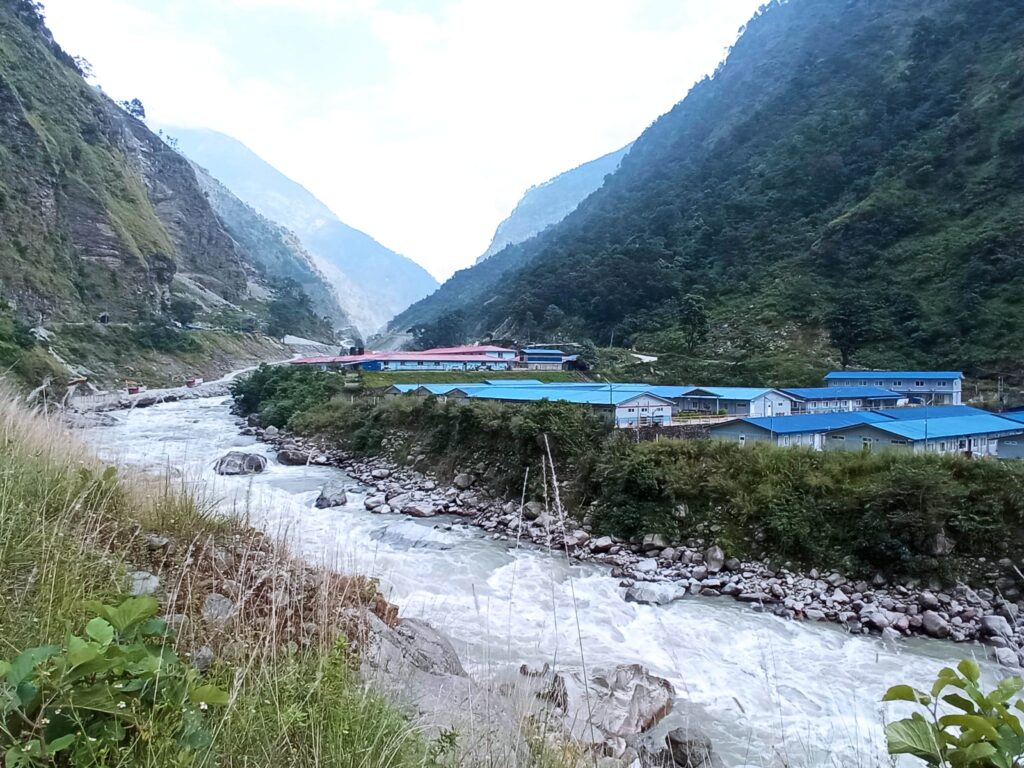
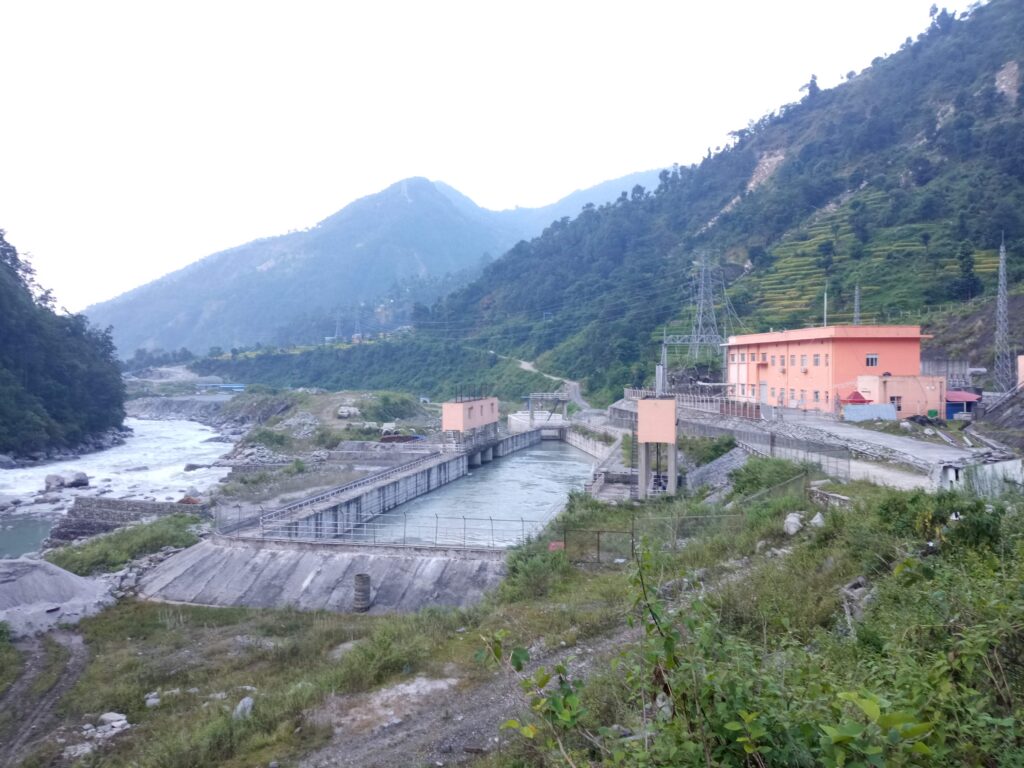
Upper Trishuli 1 hydropower construction camp at Mailung that was destroyed in August 2026. (Source RwB 2023)