Rivers without Boundaries

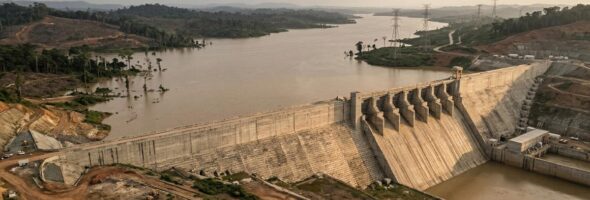
World Bank Inspection Panel decided to give the MINIS Project one more year on probation…

  OFFICIAL ANOUNCEMENT: “The WB Board on July 20 approved the Panel’s recommendation to defer for a second time a decision on whether the Panel should investigate a complaint related to the Mining Infrastructure Investment Support (MINIS) Project in Mongolia. In a February 2015 Request for Inspection, the complainants had …


Mongolian NGOs address new Ministry of Environment to protect Selenga River from damming

To: The Ministry of Environment and Green Development of Mongolia Ulaanbaatar October 12, 2012 PETITION A so-called “Shuren” hydro station project with a 300 megawatt capacity is being prepared by the World Bank’s Mining Infrastructure Support (MINIS) project to follow the notorious “Durgun”, “Taishir” hydro power stations and “Orkhon-Gobi”, “Kherlen-Gobi” …

Hydropower Under Pressure: The Rapid Rise of Next-Gen Energy Storage

Over the past decade, energy officials and climate activists have grown accustomed to celebrating the rapid decrease in solar and wind power generation costs. However, in 2025, it was energy storage, not renewable generation, that provided a cause for celebration. Hydropower now faces pressure from the development of other storage …

Rivers without Boundaries Call for Biodiversity Safeguards in Renewable Energy Shift

The rapid expansion of renewable energy in Central Asia is creating new risks for the region’s vulnerable ecosystems. To prevent conflict between climate targets and environmental protection, a coalition of public environmental organizations (including Rivers without Boundaries) has submitted a package of recommendations to energy and environmental ministries across Central …

New dams, old damage: hydropower quietly expands as biodiversity pays the price

The International Renewable Energy Agency (IRENA) has released the first of its two annual statistical reports on renewable energy capacity additions for 2025. As is customary, a revised edition will follow in approximately four months, incorporating government-submitted data that typically undergoes more rigorous verification and tends to yield more conservative …

A major weakening of nature conservation laws in Russia

At the end of 2025, the Russian government and legislature undertook an unprecedented attempt to weaken key nature conservation laws. After two years of intense debate, the ‘Law on the Protection of Lake Baikal’ was amended by the Russian State Duma on 9 December 2025 and signed by the President …