

The International Renewable Energy Agency (IRENA) has released the first of its two annual statistical reports on renewable energy capacity additions for 2025. As is customary, a revised edition will follow in approximately four months, incorporating government-submitted data that typically undergoes more rigorous verification and tends to yield more conservative figures. Last year, for instance, a post-revision review reduced the total global hydropower capacity commissioned in 2024 by nearly half — from 15,000 to 9,500 megawatts.
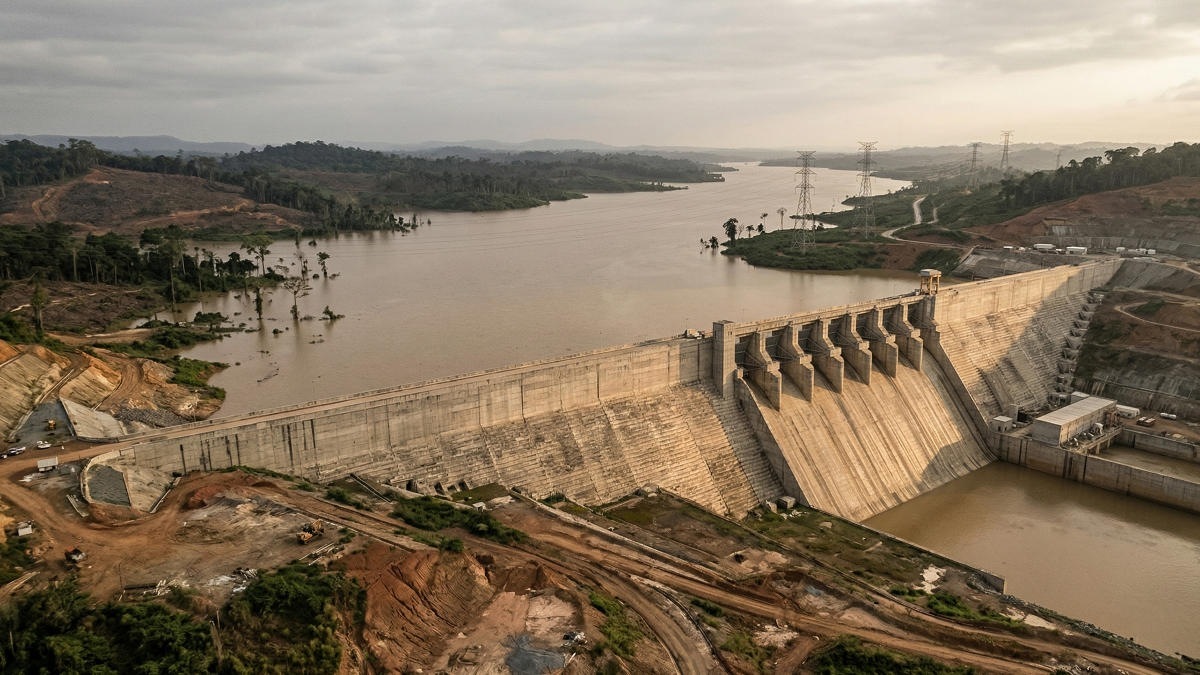
According to the preliminary report, countries worldwide commissioned more than 18,000 megawatts of new hydropower capacity in 2025. Notably, and unlike most previous years, additions outside China were nearly three times higher than those recorded in China itself. Beyond its 4,800 MW of conventional hydropower, China also brought 7,300 MW of pumped-storage hydropower (PSH) online. This reflects a global trend toward the accelerated deployment of pumped storage as a means of banking energy generated by solar and wind installations. Annual PSH additions have now crossed the 10,000 MW threshold, and the figure is expected to surpass conventional hydropower commissioning in the near future.
The substantial volume of conventional hydropower additions outside China is largely attributable to the completion of several large-scale projects in developing countries. Chief among these is Ethiopia’s Grand Renaissance Dam on the Blue Nile — a structure that poses a potential threat to agriculture in Sudan and Egypt and was built without the agreement of either country. Another landmark project, the Julius Nyerere Hydropower Station in Tanzania on the Rufiji River, has effectively bisected the Selous Game Reserve, the largest UNESCO World Heritage Site of its kind, flooding black rhinoceros habitat and setting in motion the gradual degradation of downstream Ramsar-listed wetlands. Major projects were also completed in Bhutan, India, Indonesia and Vietnam, several of which are likely to carry severe consequences for biodiversity and local communities. In Indonesia, for example, the unfinished Batang Toru hydropower plant on the island of Sumatra — which fragments the habitat of the Tapanuli orangutan, one of the rarest great apes on Earth — appears to have been prematurely included in the report.
The overall growth in hydropower commissioning is cause for concern, even if it is too early to speak of a full-blown “hydropower renaissance.” A telling indicator, however, is that capacity additions exceeding 10 megawatts were recorded in at least 40 countries, compared with 25 to 30 in previous years. This points to a rising number of new dams — large and small alike — with attendant risks of fragmentation and hydrological disruption to valuable freshwater ecosystems. Freshwater biodiversity is declining at an alarming rate, and dam construction ranks among the leading drivers of that decline, second only to the impact of climate change.
In the regions where the Rivers without Boundaries coalition is active, the contribution to global hydropower additions in 2025 remains marginal: the combined total for the entire post-Soviet space did not reach 500 MW. Regrettably, this does not reflect any sound policy commitment to the protection of river ecosystems. The proliferation of small hydropower plants across Central Asia continues to inflict serious damage on freshwater biodiversity and the integrity of mountain valley landscapes — and this despite the negligible capacity and generation volumes involved.
In aggregate, global hydropower capacity grew by 1.4 percent in 2025. By comparison, solar generation added 511,000 MW and expanded by 27 percent, while wind added 158,700 MW and grew by 14 percent. Against that backdrop, hydropower’s share is vanishingly small. Yet behind every dam lies a disrupted river ecosystem and a diminished population of freshwater fauna.